
'Walmart will source globally and more from China and will dump these cheap goods in India, making our country a dumping yard.'

Equity mutual funds attracted an all-time high net inflow of Rs 28,463 crore in March, on continued interest by retail and HNI investors, who used market correction as a good buying opportunity.

There are more of them now and the total value of such companies--out of reach for small retail players--may surprise you. Shares topping the five-figure price mark were rare ten years ago. A look at March-end figures across the listed universe in 2011 shows only one such share. There were two by 2013.

Mutual funds' average cash holdings in equity schemes topped 6 per cent in February as fund managers went slow on deployment of new inflows on expectations of better buying opportunities amid uncertainties in the market.

The AAP claimed that Sisodia would be arrested on Monday and alleged the move was initiated in view of the forthcoming assembly elections in Gujarat where it is in a direct contest with the BJP.

FMCG distributors on Thursday said it has suspended their boycott of certain products of oral care maker Colgate after talks with the company representatives over the issue of the price disparity between the traditional distributors and organised business-to-business channel. A day after a virtual meeting with Colgate-Palmolive (India) Ltd (CPIL) representatives, the All India Consumer Products Distributors Federation (AICPDF) called off its stir to boycott certain products of the company starting from January 1, 2022. "From today, the movement against Colgate is postponed till further notice," the AICPDF said in a statement.

The Supreme Court Tuesday set aside three Delhi high court orders including the refusal to grant a stay on the final arbitral award which had restrained Future Retail Ltd from going ahead with its Rs 24,731 crore merger deal with Reliance Retail and ordered fresh adjudication. In a major relief to Future group, a bench headed by Chief Justice N V Ramana also set aside the high court's order of February 2 last year, by which it had directed Future Retail Ltd (FRL) to maintain status quo in relation to the merger deal. The March 18 order of the high court, upholding the EA's award and imposing a cost of Rs 20 lakh on it as well as its directors, has also been set aside.

Mall owners have incurred a loss of around Rs 3,000 crore during the ongoing second wave of the COVID-19 pandemic over the last eight weeks due to lockdowns and restrictions imposed by various states across the country. In the wake of the second pandemic wave, around 25 per cent of the business of the retail side across categories has been lost and this is going to impact the mall owners as well, according to Shopping Centres Association of India (SCAI) Chairman Mukesh Kumar. However, mall owners would go ahead and complete their under-construction projects as they anticipate demands for commercial and office space once the pandemic recedes, the SCAI said.

83% of the CEOS plan to hire more in the new year.

To generate ample private sector interest, there is a need to introduce market-linked tariff rates.

The difference between what the banks play in the US and India is not that of soccer and football but rugby and football. SVB also has a unique character. But when risks are mispriced, the fallout could be very similar, points out Tamal Bandyopadhyay.

Amazon has reclaimed the top spot as the world's most valuable brand despite its brand value falling 15 per cent this year from $350.3 billion to $299.3 billion, said a new report. According to brand valuation consultancy Brand Finance's report, "Global 500 2023", while Amazon is back at No 1, its brand value has fallen by over $50 billion this year, with its rating slipping from AAA+ to AAA. This is as consumers evaluate it more harshly in the post-pandemic world. Brand Finance's research has found that perception of customer service at Amazon has fallen - at the same time as delivery times have lengthened.

Mukesh Ambani-owned RIL's JioMart is set to launch a slew of new products including financial services, electronics to airline tickets to take on the competition from upcoming rivals like the Tata Super app and other established players including PayTM, Amazon and Flipkart. This comes at a time when RIL's e-commerce revenues are set to grow by 35 per cent to $15 billion within four years and its core retail revenue is expected to grow at the same pace to $44 billion, as per a forecast by Goldman Sachs. "The Tata vs JioMart war will be the next big corporate battle to watch. "While Tata has an upper hand like in-house products and brands, RIL has the backing of global biggies like Google, Facebook and Microsoft," said head of a rating firm asking not to be quoted.

Shopping malls in Maharashtra on Tuesday decided to close down operations, after the government modified guidelines mandating them to operate with fully-vaccinated staff.

The RBI's financial stability report has on Wednesday highlighted the disconnect between the real economy and equity market yet again. The central bank observed that Indian equities were trading at rich valuations, with several metrics such as price to earnings multiples, price to book ratio, market cap to GDP and the cyclically adjusted P/E ratio, or Shiller P/E, at above historical averages. For instance, as on December 13, the one-year forward P/E ratio for India was 35.1 per cent, above its 10-year average, and one of the highest in the world.

India's Rs 4.5-trillion fast-moving consumer goods (FMCG) sector was one of the first to bounce back from the lockdown induced blues, reporting a year-on-year (YoY) growth in the October-December quarter last year. That said, the overall consumption figures continue to remain depressed. The FMCG market, which includes daily consumables like branded atta, hand sanitizers, edible oils, shampoos, razors, and so on, recorded 7.3 per cent value growth during the period, while the smartphone market grew by 21 per cent.

Large retailers are allegedly importing apparel made of Chinese fabric from Bangladesh at nil duty, under our free trade agreement with the latter country. However, the same agreement does not permit duty-free export from here.

'It says, we are not just an overseas player -- we are Kia India and here for good'

Ordering groceries, vegetables and daily essentials is just a WhatsApp away as billionaire Mukesh Ambani's e-commerce platform JioMart taps into the popular messaging app to scale up online business in its fight for dominance in the giant Indian retail market with Amazon and Walmart-owned Flipkart. Ambani's twin children, Akash and Isha gave a preview of the ordering at Meta's second edition of the Fuel for India event on Wednesday. A new 'tap and chat' option allows users to order groceries through WhatsApp.

Medicine sales grew at a fast clip in smaller cities like Madurai, Meerut, Agra, and Varanasi in the last 12 months. The domestic pharmaceutical market, overall, has grown 12.3 per cent in this period, according to data from IQVIA MAT for April. MAT refers to the moving annual turnover or the turnover of the last 12 months. The data further showed that the top 30 cities contributed around 32 per cent to sales.

As India looks to mend its Covid-battered economy, one thing that will grab the attention of all concerned is the path that both wholesale and retail inflation will follow. Even the Reserve Bank of India in its latest policy statement said, "Going forward, the inflation trajectory is likely to be shaped by uncertainties impinging on the upside and the downside.

India's services activity expanded at the fastest rate in a year during February, while employment fell further and companies noted the sharpest rise in overall expenses, a monthly survey said on Wednesday. The seasonally adjusted India Services Business Activity Index rose from 52.8 in January to 55.3 in February, pointing to the sharpest rate of expansion in output in a year amid improved demand and more favourable market conditions. The index was above the critical 50 mark that separates growth from contraction for the fifth month in a row during February as the roll-out of COVID-19 vaccines led to an improvement in business confidence towards growth prospects.

For Paris-headquartered IT services major Capgemini, India has always been the backbone of its services delivery for its global clients, but the company is focused on driving more value from India as it gears up its engineering research and development (R&D) presence worldwide with its acquisition of Altran Technologies. The company, which has about 149,000 employees in India, is looking to hire 60,000 associates this year. Of them, 30,000 will be recruits from campuses and the rest lateral entrants. For Ashwin Yardi, chief executive officer India, Capgemini, the focus is to make sure that the India unit is aligned with the global plans of repositioning the company as a hub of engineering R&D, operational technology, and IT.

A small Ahmedabad-based chartered accountancy firm, whose appointment was questioned by a US short seller in its scathing report against the conglomerate run by billionaire Gautam Adani, has resigned due to "pre-occupation", Adani Total Gas Ltd said. Hindenburg Research in its January 24 report that levelled allegations of fraud, stock manipulation and money laundering against the Adani group, had also raised the issue of the size and capability of the firms auditing the conglomerate. Adani group has repeatedly denied all allegations.
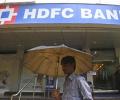
In a mixed bag for HDFC Bank ahead of the parent HDFC's merger with itself, the Reserve Bank of India has declined to make exceptions on certain aspects, and has offered some leeway on others. The country's largest private sector lender, which is aiming to conclude the merger with the home finance major by July, had written to the central bank seeking certain forbearances after announcing the $40-billion merger in April last year. In an exchange filing this evening, HDFC Bank said it received a response from RBI on Thursday and also said that there are a few pending issues.

PepsiCo has tie-ups with KFC, Pizza Hut, Domino's, Burger King, and Subway in India, while Coca-Cola has a partnership with McDonald's only

Tamil Nadu electricity minister was arrested under the Prevention of Money Laundering Act (PMLA), official sources said, making him the first minister in the M K Stalin-led government to face such an action from a central agency.

A disagreement between mobile operators and device manufacturers over e-SIMs has reached the government with the Cellular Operators Association of India (COAI) asking the DoT to order handset manufacturers to introduce eSIMs, in addition to the physical SIM slot, in all smartphones costing over Rs 10,000. The reason is the unprecedented global shortage of semiconductors which has severely impacted the supply of SIM cards across the globe and pushed up the price by four to five times. The shortage is not likely to improve before 2024.

E-commerce firms Amazon, Flipkart, and others are expected to witness blockbuster festival season sales of around $9 billion this year, surpassing pre-pandemic sales of $5 billion in 2019. The pandemic has accelerated the shift to e-commerce, with more consumers shopping online at a higher frequency than last year, observed analysts. This year's festival sales (gross merchandise value or GMV) are expected to grow 30 per cent year-on-year (YoY) to $4.8 billion during the first week of the season and potentially clock over $9-billion GMV during the whole festival month, revealed consulting firm RedSeer's e-commerce festival season report.

Whether one likes it or not, services constitute the value-addition sector that the country has to build on, using its comparative advantage in infotech and related skills, suggests T N Ninan.

The Chinese smartphone maker's focus on offline retail has helped it overtake Samsung in top 50 cities in India.

Foreign portfolio investors (FPIs) pulled out as much as Rs 17,537 crore from the Indian markets in just three trading sessions of March as investors' sentiment got dented by the uncertainty triggered by the Russia-Ukraine conflict and rising crude oil prices. As per depositories data, they pulled out Rs 14,721 crore from equities, Rs 2,808 crore from debt segment and Rs 9 crore from hybrid instruments between March 2-4. This took the total net outflow to Rs 17,537 crore.

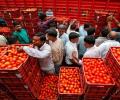
Among metro cities, tomatoes were sold at Rs 93 per kg in Kolkata, Rs 60 per kg in Chennai, Rs 59 per kg in Delhi and Rs 53 per kg in Chennai on Monday, data showed. The retail price of tomatoes was ruling at more than Rs 50 per kg in over 50 cities out of 175-odd cities tracked by the consumer affairs ministry.

'We plan to touch Rs 1 trillion of Amul brand's turnover in the next five years.'

Come October, life insurers may have to tighten their underwriting standards further for retail term plans at the behest of one of the largest reinsurers in the Indian insurance market, Munich Re. According to a source aware of the development, "Munich Re has been studying long-term mortality trends for the past few years, and has suggested some tightening in the underwriting process." "As far as financial underwriting is concerned, the reinsurer has suggested that insurers should ask for additional documents. "For example, apart from income proof, they can ask for bank statements of the prospective customer before issuing policies," added the source.

Spiralling prices pinched the pocket of consumer as edible oil, fuel and many other commodities turned dearer this year amid pandemic-induced disruptions but the inflationary pressure is anticipated to ease, though marginally, in the coming months. As consumers, at retail as well as wholesale levels, are willy-nilly learning to live with the new normal of curbs to contain the spread of coronavirus infections, experts are of the view that elevated inflation is likely to stay longer. After dealing with the devastating blows from the second COVID wave, especially during the April-June period, the economy is well on the revival path but the emergence of Omicron might unsettle the recovery trajectory in the short term.

'We were taking the Starbucks experience from the store to the home.'

Foreign portfolio investors (FPIs) have pulled out Rs 17,696 crore from the Indian markets in December so far amid uncertainty due to a new coronavirus strain, Omicron, and expectations of faster tapering by the US Federal Reserve. According to the depositories data, FPIs took out Rs 13,470 crore from equities, Rs 4,066 crore from the debt segment and Rs 160 crore from hybrid instruments between December 1-17. In November, FPIs were net sellers to the tune of Rs 2,521 crore in Indian markets.

'The rising cost of construction, the cost of doing business, high compliance, and inflation/interest rates going up have already reduced returns to single digits.'
